
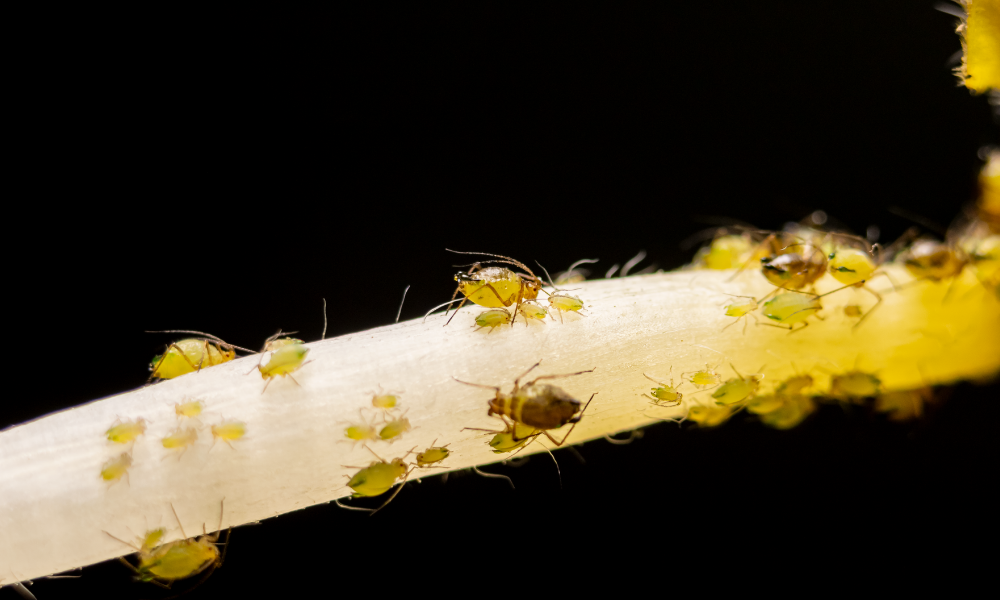
You checked your plants this morning and something's off. Leaves are curling. There's a faint stickiness on the stems. Look under a leaf and there they are…clusters of tiny, soft-bodied insects draining the life from your plant.
Aphids are one of the most common pests in cannabis, and if you've never dealt with them before, the first infestation is alarming.
The good news: they're manageable. The better news: if you set up the right beneficial insect program, you may never have to deal with any of the usual repercussions at all.
What Are Cannabis Aphids?

The aphid species responsible for most cannabis infestations is Phorodon cannabis, sometimes called the cannabis aphid or hemp aphid. It is rare to find any other species of foliar-feeding aphid on cannabis, but if you do spot aphids, it's worth a proper ID before treating.
Cannabis aphids are small, soft-bodied insects, typically 1 to 3mm long. They range in color from pale green or yellow to brown or black depending on their life stage. They reproduce rapidly. A single aphid can produce dozens of offspring in a week without needing to mate, which means a small population can become a serious infestation in a matter of days.
One critical note: root aphids (Rhopalosiphum rufiabdominalis, or rice root aphids) are a completely different pest requiring completely different control strategies. This guide focuses on foliar aphids. If you're seeing unexplained wilting with no visible insects above ground, jump to Root Aphids.
How to Identify Aphids on Cannabis
Here is what to look for:
- The insects themselves: check the undersides of leaves first. Cannabis aphids cluster on the undersides of fan leaves, around stem junctions, and on new growth tips. They're small but visible to the naked eye.
- Honeydew: aphids feed by piercing plant tissue and extracting sap. As they feed, they secrete a sticky, sugary liquid called honeydew. If your leaves or stems feel tacky, that's a strong early indicator.
- Sooty mold: honeydew residue is a growth medium for black sooty mold. If you see dark patches developing on leaf surfaces, aphids (or another sucking insect) are likely the cause. Sooty mold can render buds unsafe to consume, which makes early detection critical.
- Cast skins: as aphids molt, they leave behind translucent white skins on leaf surfaces. White specks on your leaves that aren't trichomes are often shed aphid skins.
- Leaf symptoms: curling, puckering, or yellowing leaves (especially on new growth) can indicate aphid feeding. The plant is responding to the mechanical damage and the toxins aphids inject while feeding.
- Ants: if you're growing outdoors and suddenly notice ants climbing your plants, there's a good chance they're farming aphids. Ants protect aphid colonies and harvest their honeydew. Control the ants and you make the aphids significantly more vulnerable.

Why Aphids Are Especially Problematic in the Flowering Stage
During vegetative growth, a mild aphid infestation is manageable and often treatable with chemical or organic sprays. In flower, your options narrow dramatically.
Heavy oil-based sprays and neem oil, which are both common aphid treatments, are off the table once buds are developing. These products leave residues that affect flavor, aroma, and consumability. Harsh pesticides are worse. This is why growers who wait until flowering to react to aphids often find themselves with limited, imperfect options.
The best treatment for flowering-stage aphids is prevention. Which means the time to act is before you ever see one.
Beneficial Insects for Cannabis Aphid Control
Beneficial insects are the foundation of a chemical-free IPM (integrated pest management) program. Unlike sprays, they don't leave residues, they don't harm your soil biology, and many of them continue working passively once introduced.
For cannabis aphids specifically, the two most effective beneficial insects are parasitic wasps (Aphidius species) and lacewings (Chrysoperla rufilabris). Here's how each works and when to use them.
Your First Line of Aphid Defense: Aphidius colemani
What it is: a tiny parasitic wasp (harmless to humans and plants) that targets aphids by laying its eggs inside them. The aphid becomes a "mummy" (a hollow, brown husk) as the wasp larva develops inside. Adult wasps then emerge and continue the cycle.
Why it matters for cannabis: Aphidius colemani is highly specific to Phorodon cannabis and works well as a standalone preventive agent. It's most effective when populations are low, which is exactly why you want to introduce it before you have a problem.
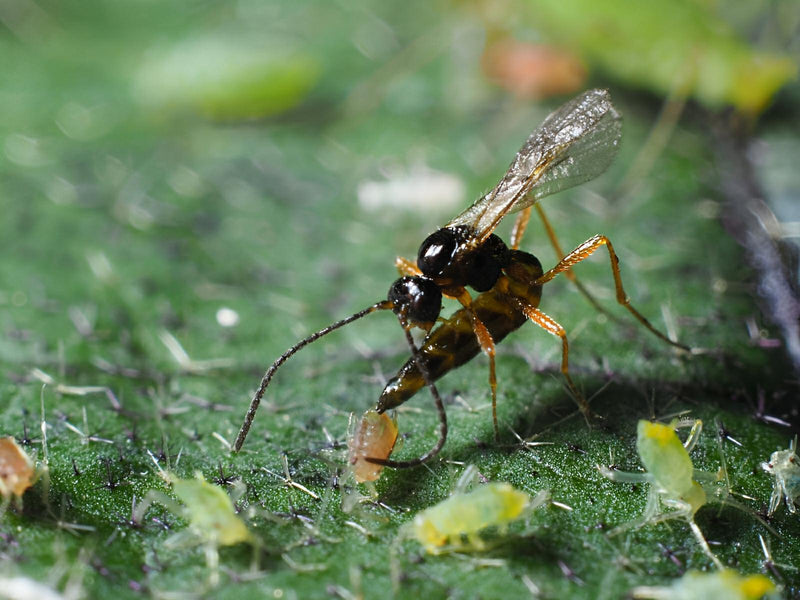
Aphidius colemani
APHIDIUSforce™ C. Targets small aphid species. Release weekly to bi-weekly before you ever see a live aphid.
Swipe to see the full table →
| Stage | Rate (ft²) | Rate (m²) | Timing |
|---|---|---|---|
| Prevention | 0.25 to 0.5 | 2.5 to 5 | Weekly to bi-weekly depending on pressure |
| Active infestation | Switch to the colemani/ervi mix below | ||
Best for: prevention throughout veg and into flower. Use colemani alone when no aphids have been found yet.
Outbreak Response: Aphidius Colemani/Ervi Mix
What it is: a combination of Aphidius colemani and Aphidius ervi, two complementary parasitic wasp species. A. ervi is more aggressive and handles larger aphid populations better than colemani alone.
When to switch: the moment you spot aphids. Once you have an active population, the solo colemani program isn't enough. Introduce the mix weekly and continue until the aphid population is controlled.
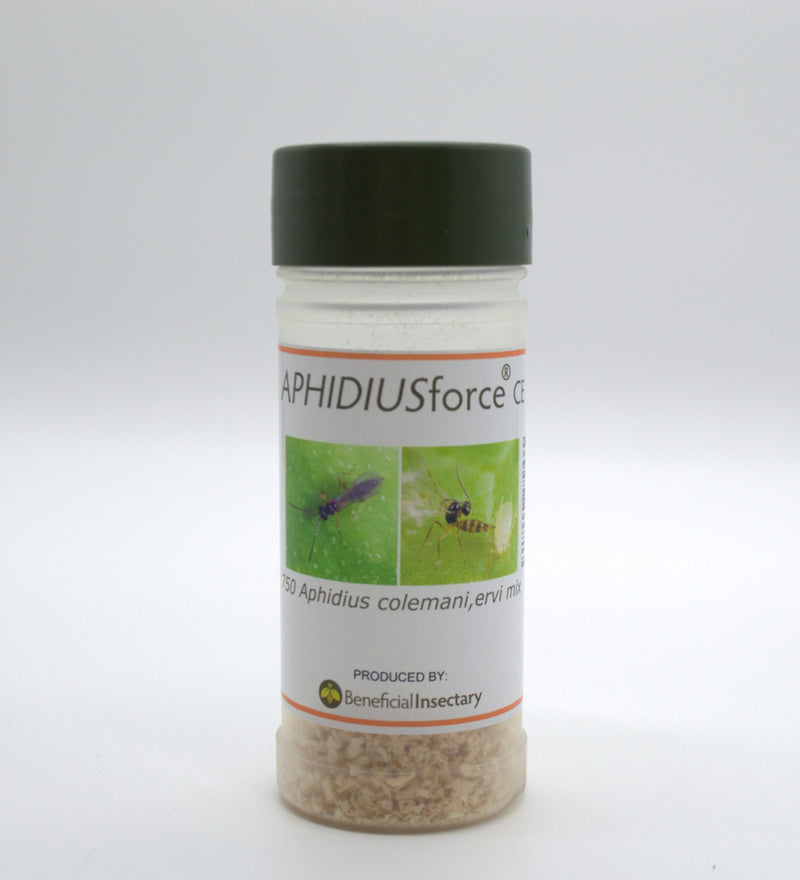
Aphidius Colemani & Ervi Mix
APHIDIUSforce™ C & E. Adds ervi for larger aphid species. Release weekly from first sign of aphids until controlled.
Swipe to see the full table →
| Stage | Rate (ft²) | Rate (m²) | Timing |
|---|---|---|---|
| Active infestation | 0.5 to 1 | 5 to 10 | Weekly from first sign of aphids, until controlled |
Best for: reactive treatment once aphids are confirmed. Continue until you're no longer finding live aphids.
Heavy Artillery: Chrysoperla rufilabris (Lacewings)
What it is: green lacewing larvae are voracious generalist predators. A single larva can consume hundreds of aphids during its development. Adult lacewings are the delicate, gauzy-winged insects you may have seen near outdoor lights, they're harmless. The larvae do the hunting.
Two product forms:
Lacewing Eggs (on cards): most growers prefer the egg card format. Eggs hatch in place and larvae immediately begin feeding wherever they land.
Lacewing Larvae: ready to hunt on release. More appropriate for hotspot treatment, releasing larvae directly in areas where aphids are concentrated.
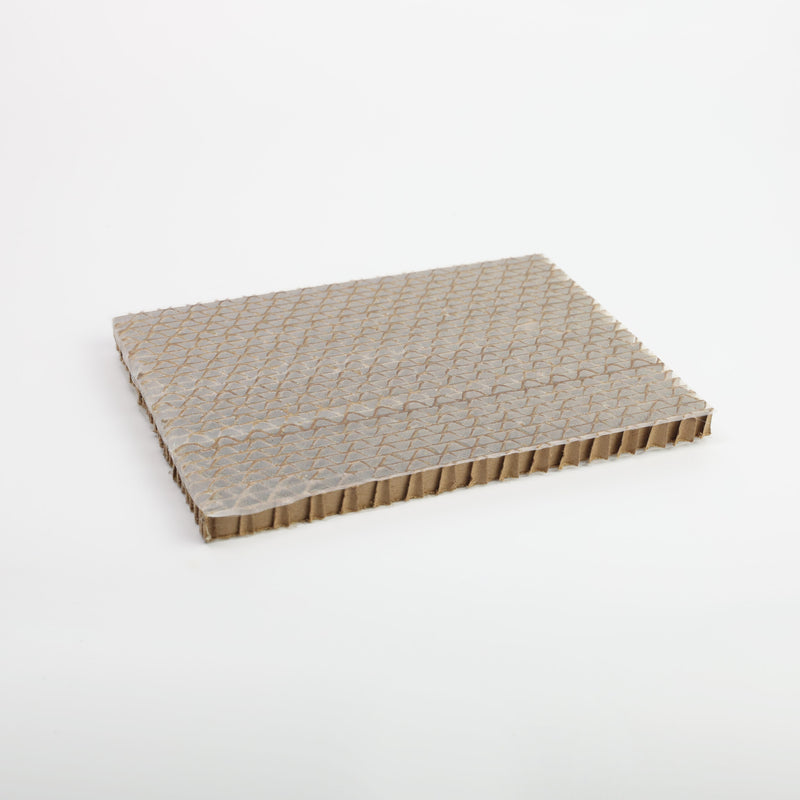
Lacewing Eggs
CHRYSOforce™ R Eggs. Do NOT use during flower. Eggs on cards, preferred by most growers.
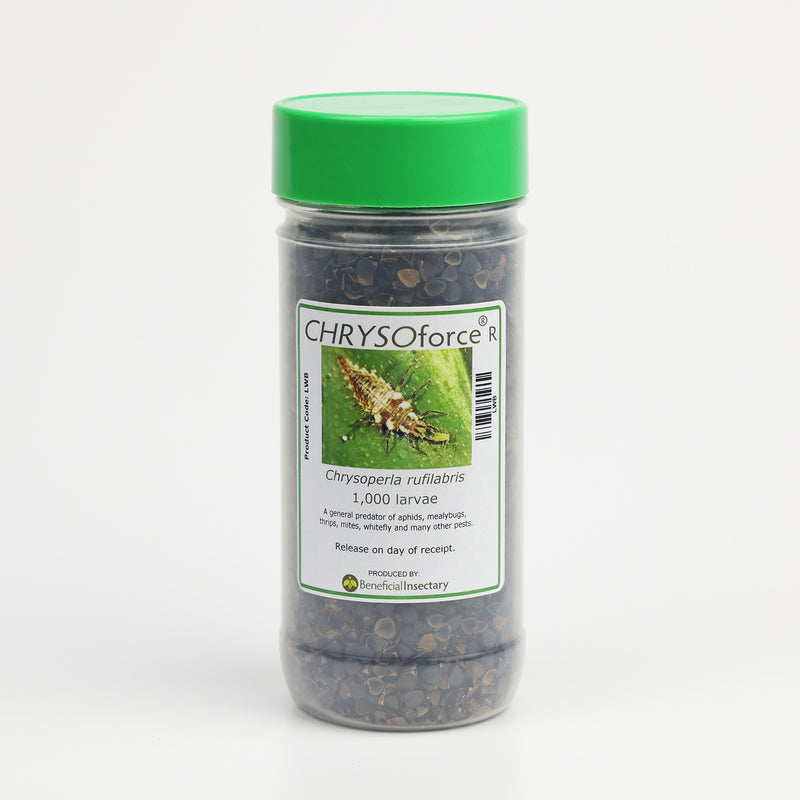
Lacewing Larvae
CHRYSOforce™ R Larvae. Can be used in flower at higher rates. Release as close to the aphids as possible.
Swipe to see the full table →
| Product | Rate (ft²) | Rate (m²) | Timing | Notes |
|---|---|---|---|---|
| CHRYSOforce™ R Eggs | 15 to 35 | 150 to 350 | Every 2 to 4 weeks depending on pressure | Do NOT use in the flower stage |
| CHRYSOforce™ R Larvae | 3 to 7 | 30 to 70 | Weekly in hotspots until controlled | Safe in flower, release directly on infested areas |
Critical flowering stage note: do not use lacewing eggs during flower! If you need lacewing support during flowering, use larvae only and at higher-than-normal rates. Release them directly onto infested areas.
The 2-Tactic Approach: Prevention vs. Active Infestation
Think of your beneficial insect program in two modes:
Prevention Mode (No Aphids Found)
Start here at the beginning of every grow cycle. The goal is to establish a patrolling population of parasitic wasps before any pest pressure arrives.
- Introduce APHIDIUSforce™ C (colemani alone) weekly to bi-weekly throughout veg at 0.25 to 0.5 per ft²
- Add CHRYSOforce™ R Eggs every 2 to 4 weeks at 15 to 35 per ft². Do not continue into flower
- Keep using yellow sticky traps to monitor for winged aphids; these are your early-warning system
Outbreak Control (Aphids Found)
If you find live aphids, escalate immediately.
- Switch to APHIDIUSforce™ C & E (the colemani/ervi mix) at 0.5 to 1 per ft², released weekly
- Introduce CHRYSOforce™ R Larvae weekly in hotspots at 3 to 7 per ft², releasing as close to the aphids as possible
- Continue both until no live aphids are found; then step back down to prevention rates
Treatment During Flowering: What You Can (and Can't) Do

This is the question every grower searches for, and the honest answer is: your options are limited once you're in flower, which is exactly why the prevention program matters.
Still safe in flower
- APHIDIUSforce™ C & E (parasitic wasps). Completely safe, no residue
- CHRYSOforce™ R Larvae. Safe in flower, use at higher rates, release directly onto infested areas
- Manual removal. Carefully removing heavily infested leaves before the population spreads
- Targeted water spray. A gentle, directed blast of water to dislodge aphids, avoiding bud contact
What to avoid in flower
- Neem oil. Leaves an unpleasant flavor and aroma on buds
- Heavy oils or emulsifiable concentrates will contaminate buds
- Any spray applied directly to developing flowers
If you harvest with aphids present: a bud wash after harvest can help remove dead insects and honeydew residue. But prevention is always the better path.
Root Aphids: A Different Problem Entirely
Root aphids (Rhopalosiphum rufiabdominalis, rice root aphids) are a different species requiring a completely different approach. They live in the root zone, not on foliage, which makes them harder to detect and harder to treat.
Signs of root aphids:
- Unexplained wilting that doesn't resolve with watering
- Yellowing and decline despite good nutrient and pH management
- Visible insects at the base of stems or crawling in the soil
- Tiny white or tan insects visible when you remove the plant from its pot
Root aphids are treated with entomopathogenic fungi (Beauveria bassiana or Isaria fumosorosea) tank-mixed with azadirachtin, applied as a root drench. This is a specialized protocol. If you suspect root aphids, consult your supplier for a scouting and treatment plan specific to your setup.
Other Preventive Measures
Beneficial insects are your primary tool, but a few environmental practices make their job easier:
- Quarantine all new plants. Isolate clones and incoming plants for at least two weeks before introducing them to your grow space. Aphids travel in on plant material more often than through the air.
- Use yellow sticky traps. Winged "colonizer" aphids are the first sign that a population is establishing. Sticky traps at canopy height catch these early movers and give you time to respond before numbers build.
- Control ants (outdoors). Ants actively protect aphid colonies from predators, including your beneficial insects. If you're growing outdoors, managing ant access to your plants makes your beneficial insect program significantly more effective.
- Keep it clean. Remove fallen leaves and debris from the grow area regularly. Decomposing plant material creates habitat for cannabis pests and can shelter aphid populations between plants.
Frequently Asked Questions
Parasitic wasps begin mummifying aphids within days of introduction, but you won't see a significant population drop until the first generation of new adults emerges, typically 1 to 2 weeks. Lacewing larvae act faster, they're active predators from the moment they hatch or are released. For a serious outbreak, plan for 2 to 3 weeks of treatment before the population is under control.
Some organic sprays are compatible with beneficial insect programs, and some are not. Spinosad, for example, can harm beneficial insects and should be used with caution. If you need to spray, do so in a targeted way on hotspots and allow a few days before reintroducing beneficials. When in doubt, check with your supplier before combining approaches.
Yes, parasitic wasps and lacewing larvae are both effective in enclosed grow environments. In fact, a tent environment can actually help concentrate their impact. Make sure you're not running sticky traps at a density that would catch large numbers of your beneficial insects alongside pests.
At minimum, check the undersides of leaves on a representative sample of your plants twice a week during veg, and twice a week during early flower. Look for live insects, cast skins, honeydew, and sooty mold. The faster you catch an early population, the easier it is to manage.
APHIDIUSforce™ C contains Aphidius colemani only, which is ideal for prevention and low-level pressure. APHIDIUSforce™ C & E adds Aphidius ervi, a complementary species that is more aggressive at higher aphid populations. Use C for prevention; switch to C & E the moment live aphids are confirmed.
Aphids themselves aren't directly toxic, but the sooty mold that grows on their honeydew secretions can make buds unsafe to consume. This is why keeping populations low during flowering, and doing a bud wash if necessary, matters for harvest quality.
If you receive a defective or damaged unit, email us a photo at help@happyhydro.com and we'll make it right immediately: replacement or refund, your call. For change-of-mind returns, we accept returns within 30 days for items in new, resalable condition. If you're not sure whether this product is right for your setup, call us first at 716-217-0353. We'd rather answer your questions before you order.
Happy Hydro has been selling growing equipment since 2006. We've carried Beneficial Insects for years because the biology works and customers who buy them leave happy. Have questions before you order? Call 716-217-0353 or email help@happyhydro.com. We're easy to reach and happy to help!