
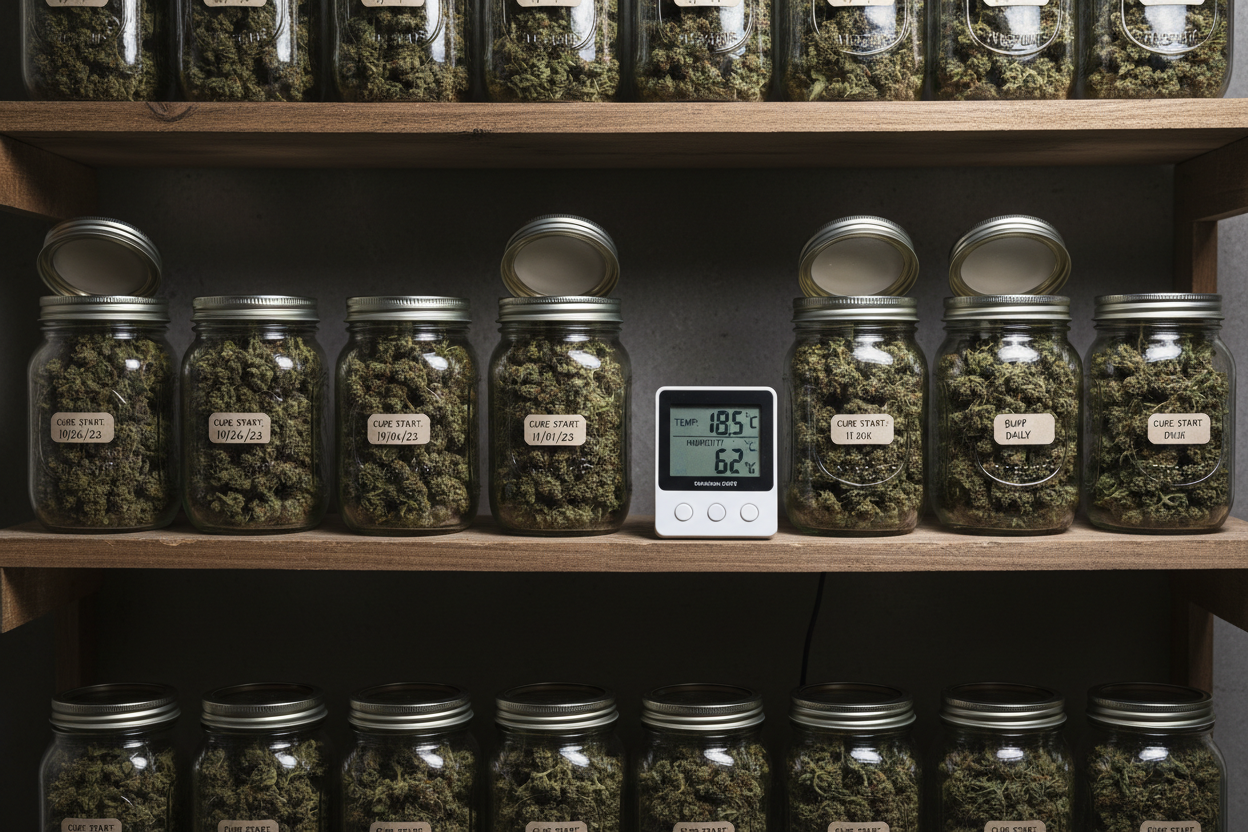
The best way to cure weed involves a precise balance of environmental control, patience, and the right equipment to transform raw flowers into a smooth, potent product. At Happy Hydro, we know that after months of careful cultivation, the final quality of your cannabis depends entirely on how well you execute the drying and curing process. This guide covers the technical methodologies, optimal humidity levels, and professional strategies required to maximize flavor and potency in your harvest.
Understanding the importance of drying and curing cannabis
The transition from a freshly harvested plant to a high-quality smokeable product is driven by complex chemical changes that occur during drying and curing. This phase is not merely about removing water; it is a controlled metabolic process that dictates the final cannabinoid profile and terpene retention of the flower.
Why proper drying is crucial for quality
Drying is the initial phase where the moisture content of the cannabis buds is reduced from approximately 75-80% down to 10-15%. If this drying process occurs too rapidly, chlorophyll fails to break down effectively, resulting in a "hay-like" smell and a harsh smoke. Conversely, drying too slowly invites mold and pathogens.
A controlled drying environment allows the plant's metabolic processes to continue slowly, breaking down sugars and starches. This degradation is essential because residual sugars produce a harsh, acrid flavor when combusted. Proper drying sets the stage for curing; without achieving the correct baseline moisture content, the curing process cannot effectively refine the bud's quality.
How curing enhances potency and flavor
Curing is often compared to aging fine wine or cheese. During this period, the biosynthesis of cannabinoids and terpenes continues. The primary goal is to stop the degradation of THC into CBN (which causes lethargy) while preserving volatile terpenes that provide aroma and flavor.
Research suggests that proper curing can stabilize terpenes, preventing them from evaporating. The process also allows for the continued breakdown of chlorophyll and the conversion of biosynthetic precursors into active cannabinoids. This results in a smoother smoke and a more profound, nuanced psychoactive effect compared to uncured flower.
The science behind the transformation: Terpenes and cannabinoids
The chemical transformation during curing involves oxidation and enzymatic activities. Cannabinoids like THCA and CBDA are relatively stable, but they require specific humidity levels to maintain their structure without degrading.
Terpenes, the organic compounds responsible for aroma, are highly volatile. Monoterpenes (like myrcene and limonene) evaporate rapidly at temperatures above 70°F (21°C). Curing in a sealed, controlled environment creates an equilibrium where moisture moves from the center of the bud to the exterior, hydrating the outer leaves and slowing the evaporation of these critical compounds. This moisture redistribution is vital for enzymatic activities that refine the terpene profile.
Drying vs. curing: What's the difference?
While both processes involve moisture management, they serve distinct functions in the post-harvest timeline.
| Feature | Drying | Curing |
|---|---|---|
| Primary goal | Remove bulk water (down to ~10-12%) | Refine flavor, aroma, and potency |
| Duration | Typically 7–14 days | 2 weeks to 6 months |
| Environment | Open airflow, 60°F / 60% RH | Sealed containers, 60-70°F / 58-62% RH |
| Chemical process | Chlorophyll breakdown, rapid evaporation | Terpene stabilization, sugar degradation |
| Outcome | Smokable but harsh buds | Smooth, potent, aromatic flower |
Preparing your harvest: The drying process
Before you can cure, you must dry your cannabis plants correctly. This stage is the most critical for preventing mold and preserving the structural integrity of the buds. The goal is a slow, even dry that preserves the trichomes and prepares the flower for long-term storage.
Setting up the ideal drying environment
Creating the perfect drying room requires strict adherence to the "60/60 rule": maintaining a temperature of 60°F (15°C) and a relative humidity (RH) of 60%. Deviating from these parameters can compromise the harvest.
Temperatures above 70°F (21°C) can cause terpenes to evaporate, leading to a loss of flavor and aroma. Humidity levels above 65% increase the risk of botrytis (bud rot), while humidity below 50% will dry the buds too quickly, locking in chlorophyll.
The room must be completely dark, as UV light degrades cannabinoids rapidly. Gentle airflow is necessary to prevent stagnant pockets of air, but fans should never blow directly onto the plants, as this causes uneven drying and trichome damage.
Effective methods for drying cannabis buds
There are two primary methods for drying: hanging whole plants or wet trimming and drying individual buds on racks.
Hanging whole plants is generally preferred for dry climates as the stems release moisture slowly to the buds, extending the drying time. However, for growers with limited space or those in humid environments, using a drying rack is often more efficient. The Happy Hydro Stack-T hanging dry rack allows you to dry large volumes of manicured buds vertically, maximizing airflow around each flower while minimizing the footprint in your drying room.
Using a rack like the Stack-T keeps buds from touching, which is critical for preventing mold development and maintaining consistent drying rates across the entire harvest.
Knowing when your buds are ready for curing
Determining the exact moment to transition from drying to curing is a skill that impacts the final quality. The most reliable indicator is the "snap test." Take a small stem attached to a bud and bend it. If it bends without breaking, the plant is still too wet. If it snaps cleanly with an audible crack, the moisture content is likely within the ideal range of 10-12%.
However, tactile feel can be subjective. For precision, many growers place a sample of buds in a sealed jar with a hygrometer for 24 hours. If the humidity reading stabilizes between 60-65%, the batch is ready for curing. If it reads above 65%, the buds need more drying time to avoid mold growth during the cure.
The best way to cure weed for maximum quality
Once your cannabis buds are dried to the correct moisture level, the curing process begins. This stage is about maintaining a stable environment where enzymes can finish their work, smoothing out the smoke and maximizing potency.
Essential tools and equipment for curing
To cure weed effectively, you need airtight containers that can maintain a stable internal humidity. Traditionally, growers used wide-mouth glass mason jars. While effective, glass jars require constant maintenance and expose buds to light if not stored correctly.
For professional-grade results with less maintenance, Happy Hydro's windowed Grove Bags utilize TerpLoc™ technology, a multi-layer film that creates the perfect microclimate for cannabis. Unlike traditional jars, Grove Bags are designed to off-gas excess water vapor and oxygen while retaining terpenes, eliminating the need for daily maintenance and reducing the risk of mold.
Step-by-step guide to curing cannabis
Achieving the best cure requires a disciplined approach:
-
Manicure the buds: Remove all sugar leaves. Excess leaf matter contains chlorophyll and can harbor moisture.
-
Fill your containers (jars or Grove Bags) about 75% full. Do not pack the buds tightly; they need air to circulate.
-
Initial monitoring: Place a small hygrometer inside the container (if using jars) to monitor RH levels.
-
Environment control: Store the containers in a cool, dark place with a temperature between 60-70°F (15-21°C).
-
Stabilization: Watch the humidity closely for the first 24-48 hours. It should stabilize between 58-62%.
The critical role of burping
"Burping" refers to opening the curing containers to release built-up gases (like CO2) and replenish oxygen. This step is vital if you are using glass jars or plastic tubs. For the first two weeks, jars must be burped daily for 15-30 minutes. Failure to do so can lead to anaerobic bacteria growth and mold.
You don't need to burp if using Grove Bags. The TerpLoc™ technology allows the bags to breathe naturally, exchanging gases without letting terpenes escape. Every time you burp a jar, valuable terpenes evaporate into the room. By using Grove Bags, you retain a higher concentration of these volatile compounds, resulting in a more flavorful final product.
Maintaining optimal humidity and temperature during the cure
The "sweet spot" for curing cannabis is a relative humidity of 58-62%.
-
Above 65% RH: The environment is too wet. Open the container to let moisture escape or move buds back to the drying rack for 12-24 hours.
-
Below 55% RH: The curing process halts. Re-hydrating over-dried buds is difficult and often results in a loss of quality.
-
Temperature: Keep the storage area between 60-70°F (15-21°C). Temperatures above 75°F (24°C) encourage mold and terpene degradation, while temperatures below 55°F (13°C) slow down the enzymatic processes too much.
Common curing mistakes to avoid
Even experienced growers can stumble during the cure. Avoid these pitfalls:
-
Over-packing containers: This restricts airflow and creates moisture pockets where mold thrives.
-
Rushing the process: Curing takes time. Trying to smoke the product after 3 days will result in a harsh experience.
-
Ignoring humidity spikes: A sudden rise in temperature can release moisture from the center of the bud, spiking humidity in the jar. Check your hygrometers regularly.
-
Light exposure: UV rays degrade THC into CBN rapidly. Always cure in the dark or use opaque containers.
How long to cure cannabis for peak potency and flavor
The duration of the curing process is a subject of debate among growers, but chemical analysis shows that distinct changes occur over specific timelines. While the minimum threshold for a decent smoke is often cited as two weeks, the biochemical transformation continues well beyond that point.
Understanding the curing timeline
For most strains, the most dramatic improvements in smoothness and aroma happen within the first 2 to 4 weeks. During this period, the majority of chlorophyll breaks down, removing the "grassy" taste.
However, for connoisseur-grade quality, a cure of 4 to 8 weeks is often recommended. Some complex strains, particularly Sativas with high terpene content, may benefit from curing for up to 6 months. Long-term curing (over 6 months) yields diminishing returns and increases the risk of THC degradation if storage conditions are not perfect.
Recognizing a perfectly cured bud
You can identify a well-cured bud by several sensory and physical traits:
-
Aroma: The smell should be pungent and distinct, representing the strain's profile (pine, citrus, fuel, etc.), with no hint of ammonia or hay.
-
Texture: The bud should feel slightly spongy but firm, bouncing back when squeezed rather than crumbling to dust.
-
Smoke: The ultimate test is the burn. Properly cured weed burns evenly with a clean white or light grey ash. Black ash indicates excess moisture or incomplete combustion of sugars. The smoke should be smooth on the throat, allowing the flavor to coat the palate.
Storing your cured cannabis for lasting freshness
Once the curing process is complete and the cannabis buds have reached their peak potential, the focus shifts to long-term preservation. Proper storage is essential to maintain the potency and terpene profile you worked so hard to achieve.
Choosing the right storage containers
The material of your storage container plays a key role in preservation.
-
Glass jars: The industry standard for decades. Glass is inert and non-porous, preventing plastic leaching. However, clear glass offers no UV protection.
-
Grove Bags: Excellent for both curing and storage due to their humidity-regulating properties and UV protection.
-
Vacuum seal bags: Useful for bulk storage over very long periods, but vacuum sealing can crush delicate trichomes and compress the buds.
-
Avoid plastic baggies: Standard sandwich bags are permeable to air and carry a static charge that can strip trichomes from the buds. They offer zero protection against crushing or moisture loss.
Maintaining ideal long-term storage conditions
To keep cannabis fresh for up to a year or more, stability is key.
-
Temperature: Aim for a consistent cool temperature, ideally between 55-65°F (13-18°C). Heat is the enemy of potency.
-
Humidity: Maintain the RH at 58-62%. Using two-way humidity control packs (like Boveda or Integra) inside your containers is highly recommended for long-term storage to prevent the flower from drying out.
-
Light: UV light is the fastest way to degrade cannabinoids. Store containers in a dark cupboard, drawer, or a dedicated opaque storage box.
-
Oxygen: Limit air exchange once curing is finished. Unlike curing, where oxygen is needed for oxidation, long-term storage requires minimizing oxygen exposure to prevent the degradation of THC into CBN.
Conclusion: Mastering the art of cannabis curing
Curing is the final, decisive step in the cultivation journey that separates average homegrown flower from top-shelf cannabis. By controlling humidity, temperature, and airflow with precision, you preserve the delicate terpenes and maximize the potency of your harvest. Whether you are a novice grower or a seasoned cultivator, investing time and care into this process pays off in the quality of your smoke.
For those looking to simplify their post-harvest workflow, Happy Hydro's complete drying and curing collection offers everything from drying racks to advanced storage solutions, supporting growers from the moment of harvest all the way to long-term storage.
Frequently asked questions about curing cannabis
How do dispensaries cure their weed?
Dispensaries typically rely on large-scale, industrial curing methods that prioritize consistency and mold prevention. They often use climate-controlled rooms with industrial dehumidifiers and HVAC systems to maintain precise environmental parameters (60°F/60% RH) for drying.
For curing, commercial operations frequently utilize large, food-grade airtight bins or automated curing systems that mechanically burp the containers to maintain airflow without manual labor. While efficient, these large-scale processes sometimes sacrifice the nuanced terpene preservation achievable with small-batch, craft curing methods like using Grove Bags or glass jars.
Does curing weed make it more potent?
Yes, curing cannabis influences both the perceived and chemical potency of the flower. While the plant stops producing cannabinoids at harvest, the curing process facilitates the conversion of non-psychoactive precursors into active compounds; for example, THCA slowly decarboxylates into THC, and the degradation of CBN is minimized.
By removing chlorophyll and breaking down sugars, curing creates a smoother smoke that allows the user to inhale more deeply and comfortably, which can improve the subjective experience of the high. The preservation of terpenes also contributes to the "entourage effect," where terpenes work synergistically with cannabinoids to modulate and heighten the overall psychoactive effects.
What is the best amount of time to cure weed?
The optimal curing time generally falls between 4 to 8 weeks for the majority of cannabis strains. At the 4-week mark, most of the chlorophyll has broken down, and the moisture content has stabilized, offering a smooth smoke and good flavor.
However, many connoisseurs prefer to cure for 8 weeks or longer to allow for deeper terpene maturation and a more complex flavor profile. While you can smoke cannabis after a 2-week cure, the quality difference between 2 weeks and 6 weeks is substantial; patience in this stage is almost always rewarded with a superior product.
Can you over-cure cannabis?
Yes, it is possible to over-cure cannabis, although it is more accurately described as improper long-term storage leading to degradation. If cannabis is left to cure for too long (typically beyond 6-12 months) without proper humidity control, the terpenes will eventually evaporate, leaving the bud flavorless.
More critically, THC will naturally degrade into CBN over time, which changes the effect from a euphoric high to a sedative, sleepy experience. To prevent "over-curing," once the buds have reached their peak quality (usually around 2-6 months), they should be moved to a long-term storage environment that is airtight, cool, and humidity-controlled to halt further oxidative changes.