
Grower's Guide
The best-paid indoor farming jobs need the exact skills you're already building
Indoor farming has grown into a real career field, and the money is not in manual labor anymore. It's in the people who understand plants and the equipment that keeps them alive: the same things you practice every time you check your reservoir pH, hold your humidity steady, or troubleshoot a watering line that stopped feeding.
The openings are real and posted daily. Search hydroponics, controlled-environment agriculture, and vertical farming on the Jooble employment site to see what's hiring near you. Below are the roles showing up most, what each one pays and does, and the part of it you're already learning in your tent.
One honest note on the numbers. General farm-labor employment is actually projected to shrink about 3% this decade. The growth and the pay are concentrated in the skilled and technical roles, the ones that need someone who can run a controlled environment and read what the plants are telling them. 2,4
The roles hiring right now
Indoor Farm Manager
Runs the daily operation: planting schedules, crew, crop quality, budgets, inventory, and food-safety compliance. Employers want someone who reacts fast when equipment fails or a crop turns. If you already juggle a feeding schedule, catch problems before they spread, and keep records across a grow, you run a one-person version of this job.
Hydroponics Technician
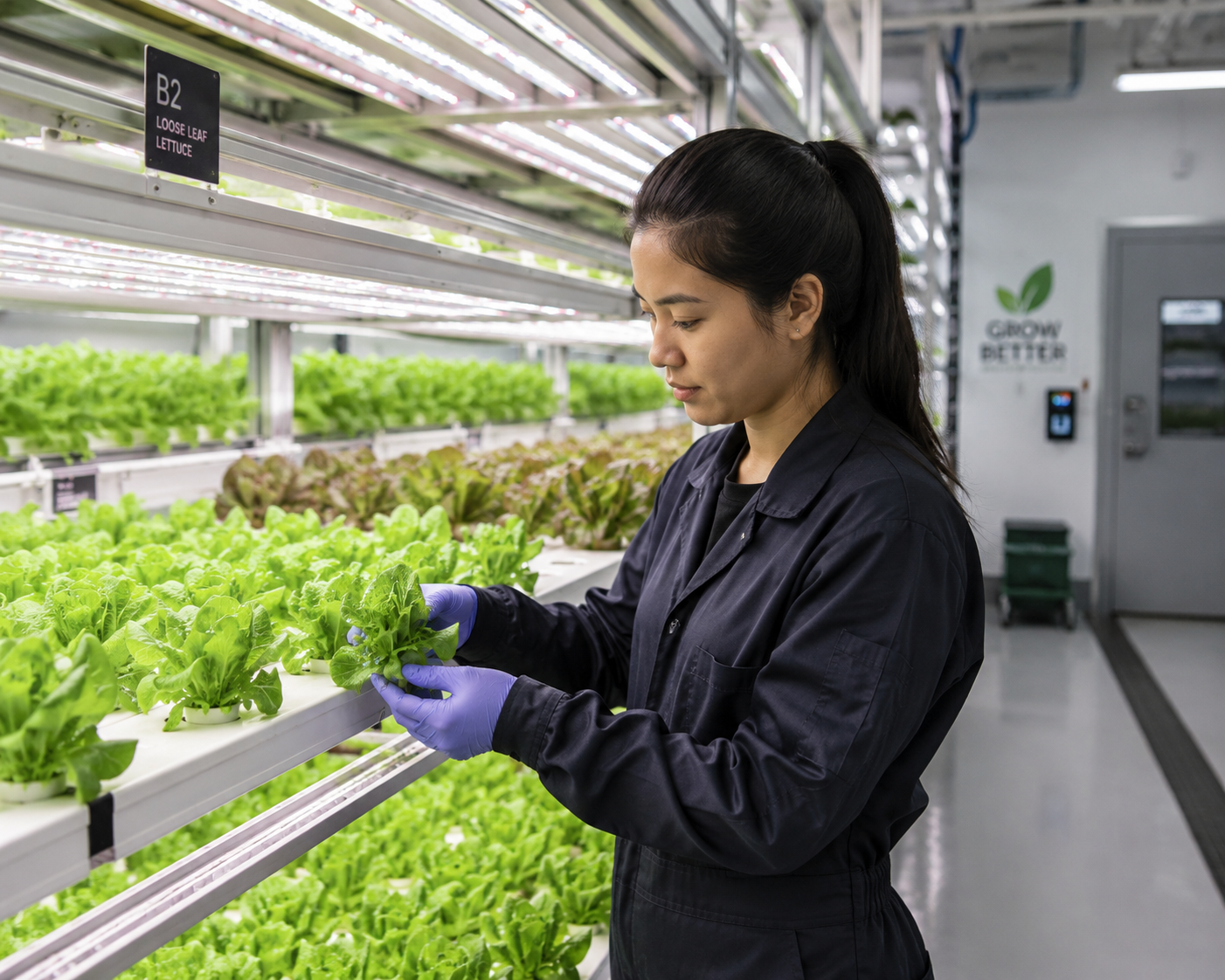
Grows plants without soil, feeding them with balanced water instead. The work is monitoring nutrients, pH, water quality, oxygenation, and irrigation, because small swings hit crop quality fast. This is the most direct crossover for home growers. Build the reps with a real self-watering setup instead of hand-watering by feel: our watering systems give you the reservoir and a reason to track your numbers cycle over cycle.
Vertical Farming Specialist
Stacks production to get more yield per square foot, tuning light, airflow, humidity, and watering on every level of the tower. It leans hard on technology, which is part of why the vertical farming market is projected to keep growing at double digits through 2030. Anyone who has dialed in a single tent's light height and airflow already understands the core problem, just on one shelf instead of ten.
Agricultural Engineer $84,630 median
Designs, improves, and maintains the hardware: automated irrigation, climate systems, conveyors, harvest gear, and packaging lines. It pays well and is projected to grow faster than average, though it usually needs an engineering degree. The home on-ramp is understanding how an automated watering system actually works, and why it fails, before anyone hands you a commercial rig to keep running.
Environmental Control Specialist
Holds temperature, humidity, CO2, airflow, and light schedules steady around the clock using sensors and controllers. A half-degree of drift or a humidity swing shows up in yield and quality. This is your grow tent's climate problem at building scale. A smart controller tied to your fans and lights runs the same logic, so the AC Infinity climate control gear is a genuine starting point for the skill.
Crop Scientist $78,770 median
Studies plant performance and tests ways to raise yield, cut disease, and shorten growing cycles. It's research work that usually wants a science degree, and it's projected to grow faster than average. The habit that leads here is one any grower can start today: keep a journal, change one variable at a time, and track exactly what it does to the plant.
Automation and Robotics Technician
Maintains and repairs the machines that seed, transplant, harvest, and pack. Labor shortages keep pushing farms toward automation, so people who understand sensors, electrical systems, and mechanical repair stay in demand. You can learn the fundamentals cheaply at home by running a hands-off watering system and fixing it when a line stops feeding. AutoPot and Blumat systems teach exactly that.
Data Analyst
Turns the flood of farm sensor data, water use, growth rate, energy draw, climate logs, and harvest weights, into decisions that make a facility more efficient. Backgrounds in data science or statistics travel well here. If you already log your tent's climate against your results, you're doing the small version. The same controllers that run your environment log the numbers for you.
Food Safety and Quality Assurance Specialist
Runs inspections, sanitation, documentation, and regulatory compliance so every harvest is clean and safe to eat. It rewards a careful, organized grower more than a specialized one. Plant experience helps but is not required, which makes it one of the more open entry points on this list.
Sales and Business Development Manager
Builds relationships with grocers, restaurants, distributors, and meal-kit companies, negotiates contracts, and forecasts demand. It leans on communication far more than horticulture, and often needs no agricultural background at all. If you understand how the crop is grown, you sell it more credibly than someone who does not.
Skills employers are looking for
Indoor farming blends growing with technology, so most postings want a mix. The technical side shows up as plant science, equipment maintenance, automation, and data. The human side matters just as much.
Familiarity with environmental monitoring systems and grower software shows up in a lot of listings, and it's the kind of thing you pick up without trying while running a controlled setup at home.
Do you need a degree?
Not always. The science and engineering roles, the ones with the highest pay, usually want a university background in biology, agriculture, or data science. Plenty of technical and entry-level positions care more about whether you can keep plants alive and troubleshoot equipment under pressure. That's exactly the thing a serious home grower proves every single cycle.
Sources
- Grand View Research, U.S. Vertical Farming Market Size & Outlook. grandviewresearch.com
- U.S. Bureau of Labor Statistics, Occupational Outlook Handbook, Agricultural Engineers (May 2024). bls.gov
- U.S. Bureau of Labor Statistics, Occupational Outlook Handbook, Agricultural and Food Scientists (May 2024). bls.gov
- U.S. Bureau of Labor Statistics, Occupational Outlook Handbook, Agricultural Workers (May 2024). bls.gov
The gear on your shelf is doing more than feeding a hobby. Dial in a system, hold your environment steady, automate your watering, and log your results, and you're building a resume for a field that's actively hiring. Want help putting together a setup that teaches those skills? That's what we do all day.
Questions? We're easy to reach.
Happy Hydro has been serving growers since 2006. Call or email us before you order, after you order, or any time something comes up. When you're happy, we're happy.